Groundhog Blues Club presents...
Tony McPhee – Eccentric Man
There was something beautifully stubborn about Tony McPhee – something that ran like a live wire, from his dedication as a vegetarian and despiser of humans who hunt, to the moment he swapped Post Office telephones for a guitar and a life in the blues.
In the early 1960s he was just ‘Mac’, clocking in by day and playing pop tunes at night. But McPhee had seen Cyril Davies and the All Stars at the Marquee Club and it changed everything. The blues wasn’t just music; it was a calling. He persuaded the band to ditch the pop, toughen up the sound, and even change their name – inspired by a track on John Lee Hooker’s House of the Blues. The Groundhogs were born.
From there it was grit, gears and the great British blues circuit. McPhee even turned down an offer to join Chris Barber – not out of arrogance, but because he believed in his own band. That faith paid off. When Hooker came to Britain, the Hogs backed him on the final week of his first tour. He loved them so much he asked them to tour with him again, travelling in their Commer van and calling them “the number one British blues band”.
They backed giants: Champion Jack Dupree, who later said they were the best band he’d ever played with; Memphis Slim; Little Walter; Jimmy Reed. They recorded with Dupree and Eddie Boyd, and cut sessions with Hooker, later reissued as Hooker and the Hogs – The London Sessions.
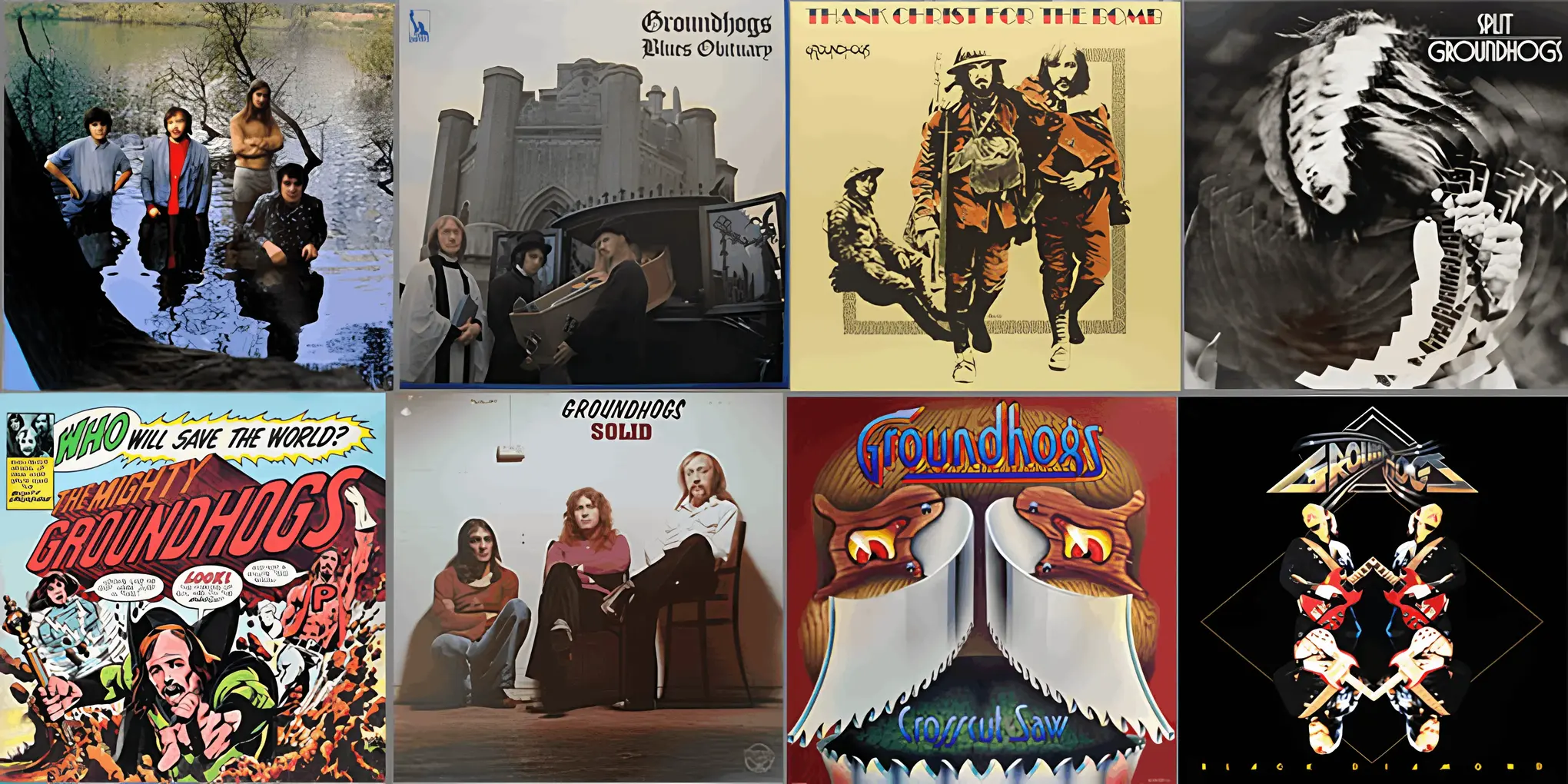
The first album, Scratching the Surface, was pure electric blues – raw, honest, unfussy. But by Blues Obituary, the sound was stretching, growing heavier, stranger. Then came Thank Christ for the Bomb. McPhee wrote every song. When John Peel played “Soldier” on his Sunday show, the album entered the charts and sold 30,000 copies. Suddenly the underground heroes were chart contenders.
Then came Split – the masterpiece. After playing ‘Cherry Red’ on ‘Top Of The Pops’ it stormed the charts and would likely have gone to number one if the record company hadn’t bungled pressing production. Even so, it re-entered, stayed for six months, sold 100,000 copies and became the sixth best selling album of 1971. It was a big year, the Groundhogs went on tour with The Rolling Stones at the invitation of Mick Jagger, and McPhee was voted the fifth best guitarist of the year.
Yet he never strutted. No glam posturing. Just ferocious, emotionally raw guitar work and a distinctive vocal style. When 1972’s Who Will Save the World? The Mighty Groundhogs hit the Top 10 – peaking at number eight – it came wrapped in a comic-strip sleeve by Neal Adams depicting the band as hapless superheroes. They lose spectacularly. The joke? Maybe the rock group could achieve more than the superheroes ever could. That dry wit was pure McPhee.
He kept pushing. Solid followed, then later Crosscut Saw and Black Diamond. In the 80s came the live powerhouse Hogging the Stage and a re-formed line-up featuring Dave Anderson of Hawkwind, and Mick Jones on drums. Even then, McPhee wasn’t chasing trends – he was chasing truth.
His influence ripples everywhere. Clapton himself cited him as an early inspiration. Mark E. Smith of The Fall, Nirvana producer Jack Endino, Julian Cope, Captain Sensible of The Damned, Spiritualized and Karl Hyde of Underworld have all felt his impact.
In 2009 one of the too frequent strokes took his voice, but not his spirit. Recognised by induction into the Blues Hall of fame, a ‘British Blues Great’, by the British Blues Awards and with 3 gold records on the wall, he still played live, charismatic and carrying a stubborn fire until 2014. He once said, “I was never fashionable.” And that’s exactly why the music lasts.
Tony TS McPhee didn’t just play the blues. He wrestled with it, stretched it, electrified it and made it entirely his own. The superheroes on that album sleeve may have failed. But the man behind the guitar? He won.
March 2026